Understanding how financial intermediaries operate is crucial for anyone entering the trading world. A broker serves as the essential link between buyers and sellers in various markets.
These intermediaries earn commissions by facilitating transactions. For retail participants, grasping different execution models becomes vital before committing capital.
The quality of order execution significantly impacts trading outcomes. Market participants need transparency and fairness when their deals are processed.
This guide explores Straight Through Processing systems and compares them with other models. Readers will learn about pricing structures, speed considerations, and regulatory aspects relevant to UK-based traders.
Understanding Forex Broker Execution Models
Different execution approaches determine how trades are processed and priced in financial markets. Each model offers distinct advantages and potential drawbacks for traders.
The choice between execution systems affects transaction costs and order handling. Understanding these differences helps traders select appropriate service providers.
Dealing Desk vs. No Dealing Desk Explained
Dealing desk brokers create their own internal market for client transactions. These market makers quote fixed spreads and act as counterparties to trades.
This execution model means traders don’t access real interbank pricing. The broker’s liquidity pool serves as the trading venue instead.
No dealing desk providers offer direct market access without internal processing. Orders route directly to liquidity providers for execution.
This approach eliminates potential conflicts of interest seen with desk brokers. Traders receive transparent pricing from multiple market participants.
DMA and Hybrid Broker Approaches
Direct Market Access systems electronically match orders with participant quotes. This execution type typically involves small markups rather than wider spreads.
Hybrid models combine both dealing desk and no dealing desk functionality. Many firms offer different account types based on client capital levels.
Larger accounts often receive direct access execution. Smaller positions may route through internal dealing desks due to market size requirements.
Understanding these execution models helps traders identify suitable providers. The right choice depends on individual trading needs and account size.
What Are STP Forex Brokers?

The STP model connects traders directly with institutional liquidity sources for more transparent pricing. This approach eliminates dealing desk intervention, ensuring trades execute in real market conditions.
These intermediaries route client transactions straight to major financial institutions. They partner with entities like Deutsche Bank and Citigroup for order fulfillment.
Direct Market Access and Liquidity Providers
When traders submit orders, the system automatically transmits them to connected institutions. Multiple liquidity sources compete to provide optimal pricing for each transaction.
The revenue model involves small markups on interbank spreads rather than trading against clients. This creates alignment between broker success and trader performance.
Key advantages include:
- Real-time market quotes reflecting actual interbank prices
- Reduced order rejections through multiple liquidity channels
- Transparent execution without conflict of interest
Superior order filling occurs because more providers participate in price competition. This system benefits active market participants seeking fair execution.
Advantages of Trading with STP Brokers

The straight-through processing approach offers several compelling advantages that enhance the trading experience. Market participants benefit from improved conditions and execution quality.
Transparency and Fair Pricing
STP systems provide genuine market access with actual interbank rates. Traders see real market prices rather than manipulated quotes.
This transparency builds confidence in order filling at true market conditions. The small spread markup is clearly disclosed upfront.
Eliminating conflicts of interest creates alignment between provider success and client performance. The model encourages more frequent activity through fair treatment.
Faster Execution and Reduced Slippage
Electronic routing delivers superior speed without manual intervention. Orders process instantly through automated systems.
Faster execution minimizes negative slippage during volatile periods. While some slippage remains inevitable, the risk decreases significantly.
Anonymity ensures orders process without personnel monitoring positions. Competition among liquidity providers results in better fills and tighter spreads.
The absence of requotes means orders fill at next available prices rather than being rejected. This creates a smoother, more professional environment for market participants.
STP Brokers Compared to ECN and Market Makers

The financial marketplace offers three primary execution approaches, each with unique characteristics that impact trading outcomes. Understanding these differences helps participants select the most suitable platform for their needs.
Differences in Order Execution and Pricing
Market makers operate as dealing desk entities, creating internal markets and acting as counterparties to client transactions. This model uses fixed spreads but carries potential conflicts of interest.
STP systems route orders directly to liquidity providers with floating spreads that include small markups. This approach eliminates direct involvement in client trades while maintaining access to real market pricing.
ECN platforms connect participants with multiple liquidity sources through electronic networks. They charge fixed commissions alongside raw spreads, offering maximum transparency in price discovery.
The key distinction lies in pricing structures. STP accounts typically feature commission-free trading with variable spreads. ECN models combine tight raw spreads with separate commission charges.
High-volume traders often prefer ECN execution for its transparent pricing. STP systems appeal to those seeking straightforward costs without separate fees. Market makers suit beginners needing guaranteed liquidity.
Regulatory Standards for Forex Brokers in the United Kingdom

The United Kingdom maintains some of the world’s most rigorous financial oversight frameworks for currency trading intermediaries. These standards protect market participants and ensure fair practices throughout the industry.
Financial Conduct Authority regulation sets the benchmark for operational integrity. This oversight creates a secure environment for investors engaging in currency markets.
Key Safety Mechanisms and Fund Segregation
Client fund segregation represents a cornerstone of UK financial protection. Firms must keep customer money separate from corporate accounts.
This separation prevents misuse of investor capital for business expenses. It also protects funds if the company faces financial difficulties.
Negative balance protection ensures losses cannot exceed deposited amounts. Leverage restrictions further minimize risk exposure for retail participants.
Compensation Schemes and Client Protection
The Financial Services Compensation Scheme offers substantial safety nets. It covers eligible claims up to £85,000 per person.
This protection applies if a regulated firm becomes insolvent. Similar European schemes provide additional security for international operations.
These layered protections demonstrate the industry’s commitment to client safety. They create confidence for investors participating in currency markets.
Evaluating Trading Platforms Offered by Forex Brokers

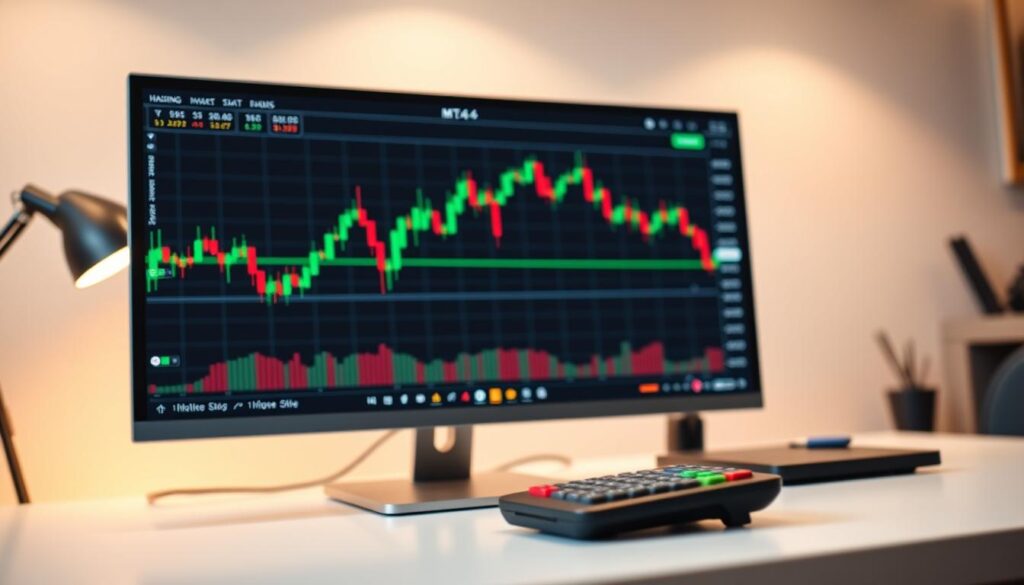
A trader’s primary interface with financial markets comes through their chosen trading software. This gateway enables real-time price observation and opportunity identification across currency pairs.
Technical participants rely on robust charting capabilities and analytical tools. Quality platforms provide comprehensive indicator libraries and drawing features.
Popular Platforms: MetaTrader 4 & 5
MetaTrader 4 and MetaTrader 5 remain industry standards for reliability and functionality. These platforms offer extensive technical analysis tools suitable for beginners.
They support automated trading through Expert Advisors and multiple order types. While functionally solid, some users find the interface somewhat dated compared to modern alternatives.
Proprietary Platforms and Additional Tools
Many leading brokers develop custom trading software with enhanced features. These proprietary platforms often feature sleeker interfaces and advanced search capabilities.
Integrated resources like economic calendars and news feeds provide valuable market context. The best platform choice depends on individual trading style and analytical needs.
Scalpers require one-click execution and minimal latency. Position traders prioritize comprehensive charting tools and multi-timeframe analysis. Proper platform selection significantly impacts trading efficiency and success.
Analyzing Execution Speed and Order Filling Performance
The interval between order submission and confirmation directly impacts trading results. This technical metric separates quality service providers from substandard alternatives.
Industry-leading firms consistently achieve average execution times under 100 milliseconds. Faster processing reduces negative slippage risk during volatile conditions.
Monitoring Execution Times
Reputable companies publish execution quality summaries in their legal documents. These reports should include average speed metrics and order filling statistics.
Transparent providers detail the percentage of orders filled at requested prices. They also disclose positive versus negative slippage occurrences.
A formal best execution policy creates legal accountability for performance standards. Without this commitment, even technically capable firms may deliver inconsistent results.
Market participants should avoid services with consistently slow processing speeds. Delays exceeding 100 milliseconds increase exposure to adverse price movements.
Regular performance monitoring ensures fair treatment and optimal trading conditions. This transparency builds confidence in the execution process.
Understanding Pricing Structures: Spreads, Commissions, and Markups

Trading costs represent a critical factor that directly impacts profitability for market participants. Different account types employ distinct pricing mechanisms that affect overall transaction expenses.
Service providers typically structure their compensation through either spread markups or separate commission charges. Understanding these differences helps traders select the most cost-effective options.
Floating Spreads versus Fixed Spreads
Floating spreads fluctuate based on real-time market conditions and liquidity provider quotes. They generally offer tighter pricing during normal market periods but can widen significantly during high volatility.
Fixed spreads remain constant regardless of market conditions, providing cost predictability. However, they typically maintain higher baseline levels than floating spreads during calm markets.
Commission-free accounts embed costs within the spread through small markups. Traders should calculate total expenses using the formula: Cost = (Spread × Pip Value) + Commission.
For example, a 0.9-pip spread on EUR/USD costs $9 per standard lot, while a 0.1-pip spread plus $6 commission totals $7. This demonstrates that advertised “commission-free” trading isn’t always less expensive.
Market participants should aim for floating spreads below 1.4 pips on major pairs. Higher starting spreads indicate potentially excessive markups that erode competitiveness.
Assessing Customer Service and Support in Trading
The quality of customer service can significantly influence a trader’s overall experience and success. Reliable customer support is crucial during critical moments like account setup, funding, and technical issues.
It ensures smooth operations and quick problem resolution. This aspect is often overlooked but is vital for both new and experienced clients.
Responsiveness and Quality of Support
Effective support must be accessible through multiple channels. Traders should look for services offering:
- Live chat for immediate assistance
- Email for detailed inquiries
- Telephone for urgent matters
Response times should match the urgency of the issue. A good broker provides 24/5 coverage during market hours.
Competence is as important as speed. Representatives must understand platforms, execution models, and account policies.
Multilingual capabilities are a major advantage for international clients. It allows clear communication of complex trading issues.
Prospective traders can test support quality before opening an account. Ask pre-sales questions about features and conditions.
Comprehensive service includes educational resources and dedicated management for larger accounts. This proactive approach builds trust and enhances the trading journey.
Implementing Safety Measures and Avoiding Forex Scams
Protecting investments begins with recognizing the warning signs of fraudulent operations in currency markets. Scammers often promise unrealistic returns with minimal risk, targeting inexperienced participants.
Legitimate companies never make unsolicited contact or pressure clients for immediate deposits. The Financial Conduct Authority maintains public registers where traders can verify company credentials.
Negative Balance Protection and Leverage Restrictions
Regulatory safeguards like negative balance protection prevent accounts from going below zero during extreme volatility. This crucial feature ensures traders cannot lose more than their deposited capital.
For Contracts for Difference (cfds) on currency pairs, regulators impose strict leverage limits. Major pairs typically cap at 1:30, reducing the risk of catastrophic losses.
Excessive leverage dramatically amplifies both potential gains and losses in forex cfd trading. These restrictions help maintain responsible trading practices.
Before opening accounts, investors should research regulatory status and compensation coverage. Starting with small deposits allows evaluation of service quality while minimizing exposure.
Key Factors for Choosing an STP Account
Smart account selection involves balancing regulatory protection with competitive trading conditions. Market participants should evaluate multiple criteria before committing funds.
The right choice depends on individual trading style and capital availability. Beginners often prefer lower entry requirements while experienced users prioritize execution quality.
Best Execution Policy and Trading Conditions
A formal best execution policy creates legal accountability for service quality. Providers without this commitment may deliver inconsistent results despite technical capabilities.
Transparent companies publish execution statistics including speed metrics and fill rates. These reports should detail average processing times and slippage occurrences.
Minimum deposit requirements vary significantly across different account tiers. Some platforms offer access for as little as $50 while others target professionals with higher thresholds.
Trading conditions encompass spreads, execution speed, and available instruments. Competitive floating spreads typically start below 1.4 pips on major pairs.
Slow processing exceeding 100 milliseconds increases negative slippage risk. Quality liquidity relationships ensure consistent order filling and tighter pricing.
Evaluating the complete package helps identify the optimal service provider. The best choice aligns with individual needs and trading objectives.
Strategies for Making Money with the Right Forex Broker
Selecting a suitable intermediary is just the first step; the real challenge lies in developing methods to make money consistently. Success in this field depends on a disciplined approach that combines sound strategy with effective risk management.
Informed Trading Decisions and Market Insights
Profitable participants base their moves on analysis, not emotion. They utilize economic calendars and research tools to understand currency market drivers. This leads to informed trading decisions with clear rationales.
A key advantage of transparent intermediaries is their alignment with client success. They profit from volume, creating an environment that encourages profitable activity. This partnership supports a long-term investment mindset.
Effective money management is the cornerstone of profitability. Traders should never risk more than a small percentage of capital on a single trade. Using stop-loss orders limits potential downsides significantly.
Realistic expectations are vital. Professional investors often target modest, consistent returns. They view forex trading as a skill to be refined through continuous education and practice.
Final Thoughts on Selecting the Ideal STP Forex Broker
Successful currency market participation depends heavily on selecting a transparent and reliable execution partner. The right choice balances regulatory protection with competitive trading conditions that suit individual needs.
Thorough due diligence before opening an account prevents costly mistakes. Verify regulatory status, examine execution statistics, and test platforms through demo accounts. Reputable service providers demonstrate alignment with client success through fair pricing and reliable order filling.
Personal trading skills remain equally important alongside broker selection. Market analysis, risk management, and emotional control determine long-term outcomes. Starting with smaller deposits allows evaluation while minimizing exposure.
Informed decisions based on regulation, transparency, and competitive pricing position traders for optimal results. Continuous learning and disciplined execution complete the foundation for sustainable market participation.