In the world of finance, gold trading offers a unique opportunity for investors. This method allows individuals to follow the value of gold against the US dollar, often referred to as XAUUSD. With the help of CFDs, traders can speculate on price movements without needing to own physical bullion or worry about storage.
Gold spot prices reflect immediate transactions and can change every few seconds during active trading periods. This rapid update means that traders must stay alert to seize opportunities. Moreover, while some seek to buy gold as a long-term investment, others focus on short-term price fluctuations.
For UK readers, it’s crucial to review current product terms, costs, and leverage conditions before deciding to engage in this type of trading. Understanding the demand and supply dynamics, as well as the impact of inflation on prices, can enhance one’s trading strategy.
How to approach blueberry markets gold trading in the UK
Navigating the financial landscape requires a solid understanding of various investment options. One popular method is through the XAUUSD, a CFD that reflects the value of gold against the US dollar. Unlike owning physical bullion, this contract allows traders to speculate on gold prices without the burden of storage.
The global gold supply grows at a rate of about 2-3% annually. This steady increase means that demand can significantly impact prices, even when production levels change gradually. Major producers like China, Australia, Russia, and the United States play a crucial role in shaping the market dynamics.
When comparing investment options, it’s essential to understand the differences between CFDs, physical gold, and exchange-traded funds (ETFs). While physical gold requires secure storage, ETFs use investor shares to purchase and store bullion, making them more accessible. Below is a comparison of these options:
| Investment Type | Ownership | Storage Requirements | Market Access |
|---|---|---|---|
| CFDs | No | None | Easy |
| Physical Gold | Yes | High | Moderate |
| ETFs | Indirect | Low | Easy |
Check XAUUSD spreads and the full cost of a trade
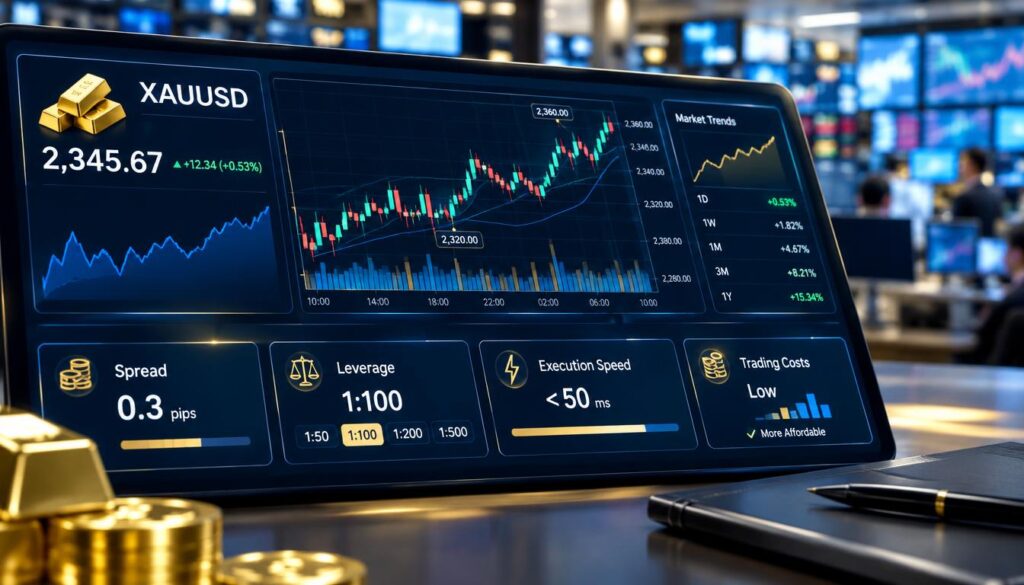
Understanding the costs involved in XAUUSD trading is crucial for every investor. The live bid-ask spread can fluctuate based on market conditions. Traders should regularly check these values, as they can change rapidly during active trading periods.
Acuity provides market data for informational purposes. Therefore, it’s important to verify the current platform specifications before entering any contract. This ensures that traders are aware of the latest spreads and prices.
When reviewing costs, consider the following:
- Spread
- Commissions
- Overnight financing
- Currency conversion fees
- Other applicable charges
Prices can update every few seconds, so do not assume fixed costs. Before trading gold CFDs, investors should maintain a checklist. Record the position size, entry price, exit price, holding time, and total account cost to ensure a well-informed trade.
| Cost Component | Description | Impact on Trade |
|---|---|---|
| Spread | Difference between bid and ask price | Affects entry and exit costs |
| Commission | Fee charged by the broker | Reduces overall profit |
| Overnight Financing | Cost for holding positions overnight | Increases long-term costs |
| Currency Conversion | Fee for converting currencies | Affects profit margins |
Understand leverage, margin, and potential losses before opening a position

Before entering the world of contracts, investors must grasp the intricacies of leverage and margin. Understanding these concepts is essential for making informed decisions in the financial landscape. Leverage allows traders to control larger positions with a smaller amount of capital, which can amplify both gains and losses.
It’s crucial to check the margin requirement before opening a position. This requirement dictates the funds needed to initiate a trade. For instance, if a trader uses leverage of 10:1, a small movement in the XAUUSD price can significantly impact their contract value.
To size a position effectively, consider available funds, personal risk tolerance, and a planned stop level. A well-calculated position can help mitigate potential losses. For example, let’s say a trader invests £1,000 with a leverage of 10:1. A mere 1% movement in price could lead to a £100 gain or loss, showcasing the risks involved.
Blueberry Markets warns that margin trading involves a high level of risk. Losses must not threaten a trader’s lifestyle, and understanding these risks is paramount for successful investing.
| Aspect | Description | Impact |
|---|---|---|
| Leverage | Allows control of larger positions | Magnifies gains and losses |
| Margin Requirement | Funds needed to open a position | Determines risk exposure |
| Risk Tolerance | Investor’s comfort with losses | Affects position sizing |
Place and manage a gold CFD trade on Blueberry Markets
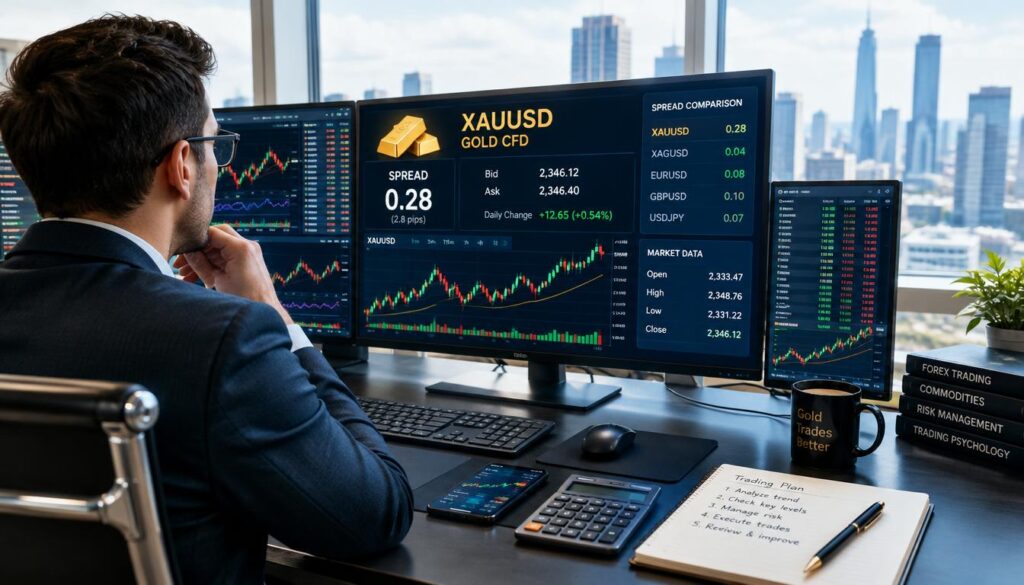
Engaging in the world of financial assets requires a strategic approach to executing trades. Traders can easily locate XAUUSD on the trading platform. Once found, selecting a position size becomes the next crucial step. This size should reflect individual risk tolerance and account balance.
After choosing the position size, traders must select an order type. Options include market orders for immediate execution or pending orders for future trades. Understanding these choices is vital for effective trading.
Setting risk controls is essential. Utilizing stop-loss and take-profit instructions helps in maintaining a defined trading plan. However, it’s important to note that these controls cannot completely eliminate losses during periods of market volatility.
Before confirming any order, it’s wise to review the account’s margin, spread, commission, and financing details. This ensures that all aspects of the trade are understood. Additionally, using a demo account can provide a risk-free environment to practice trading gold CFDs.
Lastly, UK readers should verify the applicable Blueberry entity and its regulatory disclosures before opening an account. This step ensures compliance with local regulations.
| Order Type | Description | Execution Speed |
|---|---|---|
| Market Order | Executed immediately at current market price | Fast |
| Pending Order | Executed at a specified price in the future | Variable |
| Stop-Loss Order | Limits losses by closing a position at a predetermined price | Fast |
Use gold prices, market drivers, and analysis to inform trade decisions

Successful financial decisions rely heavily on understanding market influences and price movements. Traders should focus on key factors that affect the value of assets. This includes tracking supply and demand, as well as central bank activities.
Central banks hold roughly one-fifth of all mined gold. Their purchasing decisions can significantly impact market dynamics. A weaker US dollar often makes gold more affordable for international buyers. Conversely, a stronger dollar can exert downward pressure on prices.
Interest rates also play a crucial role. Lower rates reduce the opportunity cost of holding non-yielding assets. Understanding real interest rates is vital, as they may influence gold price movements more than nominal rates.
Moreover, geopolitical tensions and economic stress can lead to increased demand for safe-haven assets. Traders should combine technical analysis with an awareness of market volatility and economic uncertainty.
Long-term investors might utilize weekly and monthly charts. In contrast, shorter-term traders may benefit from daily and hourly charts to evaluate market conditions effectively.
Build a more informed, risk-aware approach to trading gold CFDs
A sound plan starts with knowing the costs and risks. Before opening a position, a person should check the spread, margin, overnight financing, and order execution. Leverage can magnify price moves, so losses may exceed what they expect or can afford. Position size should match their risk limits.
Supply and demand, central-bank activity, interest rates, inflation, and changes in the US dollar can all affect gold prices. During times of stress, safe-haven demand may also shift. These forces can change quickly, so no single signal offers certainty.
Before choosing an approach, readers can compare CFDs with physical gold, ETFs, futures, and other assets. Gold has sometimes shown a low link to stocks and bonds, but past patterns do not promise future results. Independent research, demo practice, and professional advice can help. Market data is not personal financial advice.