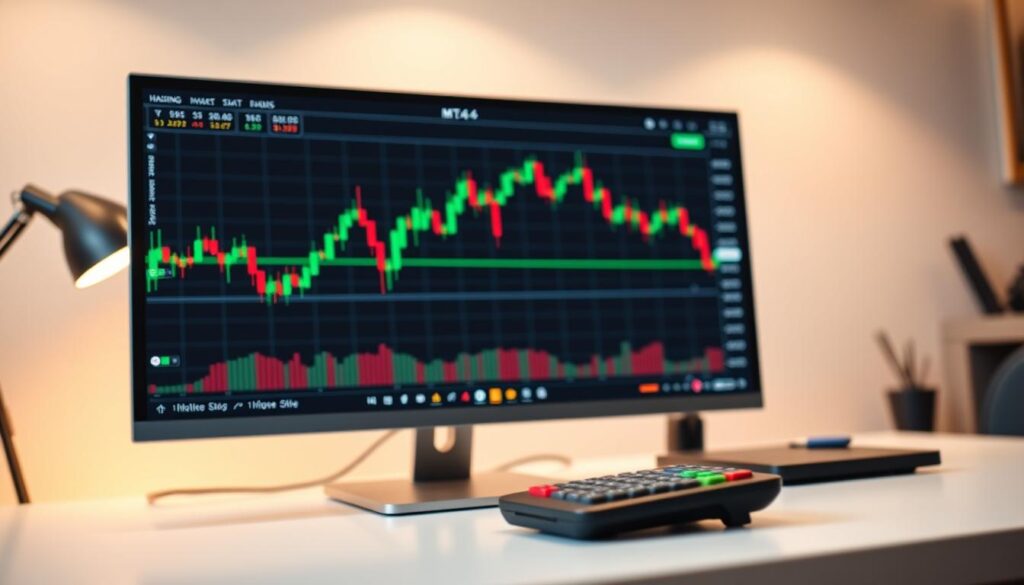
Many market participants seek platforms that offer amplified trading power. These specialized services attract significant attention from investors worldwide. UK-based market players show particular interest in these opportunities.
The financial markets offer various ratio options for capital expansion. Standard retail limits typically sit around 30:1. Some international providers extend ratios dramatically higher. Options can reach 1:1000 or beyond.
This financial tool presents a double-edged sword. It can magnify potential gains substantially. However, it also increases exposure to market movements. Understanding this balance is crucial for success.
Regulatory frameworks differ across jurisdictions. The Financial Conduct Authority limits retail participants to 30:1 ratios in the UK. Professional status may allow access to greater capital expansion.
This guide explores reputable platform comparisons and risk management approaches. It examines regulatory boundaries and expert assessments. The goal is helping investors make informed choices when selecting services.
Choosing properly regulated entities with transparent operations remains essential. Strong reputations and reliable technology platforms matter greatly. Both seasoned professionals and newcomers should prioritize safety.
Understanding High Leverage Forex Brokers
Financial amplification mechanisms enable traders to access larger market exposures than their account balances would typically allow. This fundamental concept operates through margin-based arrangements with service providers.
Key Concepts in Forex Leverage
Leverage represents the ratio between a trader’s capital and the position size they can control. For instance, 100:1 amplification means $1,000 margin controls a $100,000 trade.
Margin requirements determine the funds needed to open positions. Position size refers to the total value controlled. These elements interconnect within every currency transaction.
Standard retail ratios typically range from 30:1 to 50:1. More substantial amplification extends to 100:1 or 500:1 levels. Extreme options can reach 1,000:1 or beyond.
How Leverage Impacts Trading
Amplification magnifies both profits and losses proportionally. A small favorable price movement generates significant gains. Conversely, minor adverse moves can rapidly deplete accounts.
With 1,000:1 ratios, even 0.1% price movements can cause total capital loss. This demonstrates the razor-thin error margin involved.
Risk management becomes essential regardless of chosen ratios. Providers may issue margin calls when equity falls below requirements. Automatic position closures protect against negative balances.
The Appeal of Ultra-High Leverage Trading
Traders often pursue extreme capital expansion options to access market opportunities beyond their normal financial reach. These specialized arrangements attract participants seeking maximum market exposure with minimal initial commitment.
The psychological appeal lies in participating in significant market movements without large capital outlays. This approach opens doors that would otherwise remain closed to traders with limited funds.
Small Account, Big Positions
Market participants with modest starting funds can control substantial positions through specialized arrangements. A $500 deposit might control $500,000 in market value at 1:1000 ratios.
Standard 30:1 limits would require approximately $16,500 for equivalent exposure. This dramatic difference explains why some traders seek maximum position sizing capabilities.
Scalping and High-Frequency Strategies
Professional scalpers require substantial amplification to profit from tiny price movements lasting seconds. These strategies depend on capturing minimal fluctuations across multiple trades.
High-frequency approaches often involve dozens of simultaneous positions. Minimal margin requirements per trade enable maximum opportunity utilization throughout trading sessions.
Experienced participants view these tools as capital efficiency mechanisms rather than risk amplifiers. They understand that disciplined position sizing remains critical regardless of available ratios.
Evaluating the Risks of High Leverage

Market participants seeking amplified position sizing capabilities must confront the significant perils associated with this approach. The same multiplier effect that creates opportunity also introduces substantial danger to capital preservation.
At extreme ratios, even minor market movements can produce dramatic consequences. A mere 0.1% price shift against a fully utilized position can erase an entire account balance. This leaves virtually no room for error in volatile conditions.
Margin Calls and Overexposure
Service providers continuously monitor account equity levels relative to margin requirements. When available funds drop below required thresholds, automatic margin calls trigger immediate position closures. This protective mechanism prevents negative balances but can crystallize losses unexpectedly.
Overexposure occurs when traders allocate excessive capital to single positions or correlated markets. Without proper diversification, adverse price movements can rapidly deplete trading accounts. Emotional decision-making often worsens these situations as stress levels increase.
Rapid market events like economic announcements or flash crashes present additional challenges. Price gaps may bypass protective stop-loss orders, potentially resulting in losses exceeding initial deposits. Professional accounts with elevated ratios may lack negative balance protection safeguards.
Proper risk management remains essential regardless of available amplification options. Sound trading strategies and adequate capitalization should never be replaced by reliance on extreme position sizing alone.
Navigating Regulatory Limits in the UK

The British financial landscape features specific boundaries that govern how traders can utilize borrowed capital. These regulations create a protective framework while allowing market access.
The Financial Conduct Authority establishes clear rules for position sizing. These guidelines help maintain market stability and protect participants.
FCA Guidelines and Leverage Caps
UK retail traders face structured exposure limits across different instruments. Major currency pairs allow 30:1 ratios. Minor pairs and gold permit 20:1 levels.
Other commodities have 10:1 caps. Individual shares and non-major indices restrict ratios to 5:1. These boundaries prevent excessive risk-taking.
Professional status offers different parameters. Qualified traders can access ratios up to 1:400. Eligibility requires substantial experience and portfolio size.
Negative balance protection safeguards retail accounts from losses exceeding deposits. This key feature distinguishes UK-regulated services.
Some participants seek offshore options for greater flexibility. However, these alternatives typically reduce regulatory safeguards. The trade-off requires careful consideration.
Top High Leverage Forex Brokers for UK Traders

Several well-regarded financial services companies serve the UK market with sophisticated trading solutions. These providers offer different levels of market exposure for various types of investors.
High Leverage Forex Brokers Reviewed
IG stands out as a comprehensive choice with extensive market access. Their Swiss entity provides enhanced ratios for qualified participants. The platform includes advanced research tools and educational resources.
eToro excels in social trading features. Their CopyTrader system allows automatic position replication. Professional clients can access expanded trading capabilities through this innovative platform.
XTB offers commission-free services with competitive pricing. Their xStation 5 interface provides intuitive charting tools. The company maintains strong regulatory compliance across jurisdictions.
Product Roundup of Leading Platforms
AvaTrade provides unique risk management features like AvaProtect. This tool offers insurance on selected positions. The company supports multiple trading interfaces for different experience levels.
Saxo Bank delivers premium services with sophisticated technology. Their platform suite caters to serious market participants. Swissquote combines banking security with trading flexibility.
Each provider brings distinct advantages to British investors. The choice depends on individual trading preferences and experience levels. Proper due diligence ensures optimal platform selection.
Comparing Trading Features and Platforms

The actual trading experience depends heavily on the specific capabilities and cost structures offered by various financial intermediaries. Beyond basic ratio considerations, market participants should evaluate comprehensive platform features that impact daily operations.
Spreads, Deposits, and Account Types
Different service providers offer distinct pricing models and entry requirements. IG maintains competitive spreads starting from 0.6 pips on major currency pairs with a £250 minimum deposit. Their platform supports over 80 forex instruments across multiple interfaces.
XTB provides commission-free services with spreads from 0.8-1.0 pips and no minimum deposit requirement. The xStation 5 platform delivers 57 currency pairs with intuitive charting tools. This accessibility makes it suitable for various experience levels.
eToro features spreads from 1.0 pip with a $50 minimum deposit. Their social trading platform includes 49 currency pairs alongside innovative copy trading functionality. Saxo Bank offers spreads from 0.8-1.0 pips with no minimum deposit for Classic accounts.
Account variety represents another critical differentiation factor. Swissquote requires a $1,000 minimum deposit but provides premium platform access. AvaTrade offers fixed spreads from 0.8-0.9 pips with a $100 deposit requirement across multiple account types.
Each platform brings unique advantages to different trading styles. The choice depends on individual preferences regarding costs, accessibility, and technological sophistication.
Capital Efficiency: Trading With Smaller Deposits

Capital efficiency represents a core principle for traders seeking optimal market exposure with limited funds. This approach allows market participants to control substantial positions while maintaining significant account reserves.
Different amplification ratios dramatically affect margin requirements. At 100:1 ratios, controlling a $100,000 position requires just $1,000 in margin funds. More substantial 500:1 ratios reduce this requirement to only $200 for the same position size.
Maximizing Buying Power
Strategic use of financial amplification enables diversified portfolio management. A trader with a $5,000 account can maintain five simultaneous positions at 100:1 ratios. Each position might control $10,000 while keeping adequate free margin.
This approach provides flexibility to capitalize on emerging opportunities. Traders can maintain substantial reserves for risk management buffers. Proper position sizing remains critical regardless of available ratios.
Capital efficiency should never be confused with capital safety. While less margin per position increases buying power, it also amplifies potential losses. Professional traders view these tools as capital allocation mechanisms rather than risk amplifiers.
Effective risk protocols including stop-loss orders and position limits ensure balanced approaches. Maximizing buying power requires disciplined management alongside technical advantages.
Real-World Examples and User Experiences

Steven Hatzakis’ 2010 prediction illustrates regulatory impacts on trader behavior. The veteran analyst correctly foresaw that strict capital limits would push market participants toward offshore options.
Many traders subsequently sought platforms with fewer restrictions. This migration pattern continues today as regulations tighten globally.
A concrete example shows the risks clearly. A $2,000 account controlling a $1 million position faces dramatic exposure. Just a 10-pip market movement represents a $1,000 change.
Markets can easily move this distance within seconds. This demonstrates how quickly accounts can deplete with maximum position sizing.
Psychological patterns often emerge during volatile periods. Initial successes sometimes create overconfidence. Subsequent losses may trigger panic decisions.
Margin calls during economic announcements provide learning opportunities. Even seemingly conservative positions can trigger automatic closures. Platform performance during these moments proves critical.
Both positive and negative experiences offer valuable insights. Disciplined professionals show how to use tools responsibly. Cautionary tales highlight the importance of risk management.
Insights from Expert Reviews and Trust Scores
Independent broker evaluations provide crucial insights for traders navigating complex financial services. These assessments help market participants identify reliable platforms with strong regulatory oversight.
Professional reviews offer transparency in an industry where objective information matters greatly. They help traders make informed choices about their trading activities.
Evaluation Methodologies
ForexBrokers.com employs rigorous testing processes for platform assessments. Their approach includes hands-on testing and thorough fact-checking procedures.
The team collects thousands of individual data points for comprehensive comparisons. Evaluation criteria cover multiple essential factors for traders.
Key assessment areas include regulatory standing and platform technology. Execution quality and cost structures receive detailed analysis. Customer support and educational resources complete the evaluation framework.
Steven Hatzakis brings extensive experience to these reviews. With over 25 years as a forex trader, his unbiased assessments carry significant weight. His expertise is sought after at global financial conferences.
IG achieved the highest Trust Score of 99 and #1 Overall Broker ranking. This reflects multiple Tier-1 regulatory licenses and comprehensive platform features. Strong oversight becomes particularly important when using amplified position sizing.
The Trust Score system ranges from 0-100, measuring regulatory compliance and operational transparency. It helps traders quickly identify the most reliable service providers for their accounts.
Advanced Risk Management Strategies in Leverage Trading
Sophisticated position management techniques form the foundation of sustainable trading practices. These methods help market participants navigate volatile conditions while protecting their capital.
Proper risk management becomes essential when using amplified position sizing. The potential for rapid losses demands proactive protective measures.
Stop-Loss Orders and Protective Measures
Stop-loss orders represent the first line of defense against unexpected market moves. Traders should place these protective orders on every position.
Different stop types serve various purposes. Standard stops close positions at predetermined levels. Trailing stops automatically adjust as prices move favorably.
Guaranteed stops ensure execution at exact specified prices. This protection proves valuable during market gaps. IG offers this feature for additional security.
Position sizing calculations prevent overexposure. Market participants should risk only 1-2% of their account balance per trade. This discipline prevents catastrophic losses.
Maintaining adequate free margin provides buffer against normal volatility. Insufficient reserves can trigger premature margin calls. Diversification across non-correlated pairs reduces portfolio risk.
AvaTrade’s AvaProtect feature offers unique insurance coverage. It protects selected trades against losses for set periods. These tools should be viewed as essential rather than optional.
Regular position reviews adapt to changing market conditions. This ongoing assessment maintains appropriate risk levels. Effective risk management supports long-term trading success.
Maximizing Returns with Professional Leverage Options
Professional trader status represents a significant upgrade in trading flexibility for qualified UK participants. This classification allows access to expanded position sizing beyond standard retail limits.
The Financial Conduct Authority sets clear requirements for professional classification. Applicants must demonstrate substantial trading experience and maintain a portfolio exceeding €500,000. Consistent trading activity throughout the previous year is also necessary.
Benefits for Qualified Traders
Professional accounts provide substantial advantages for experienced market participants. They can access significantly higher ratios than retail clients. This enables more sophisticated trading strategies.
Different financial intermediaries offer varying levels of professional access. IG provides ratios up to 1:222 for qualified traders. eToro and AvaTrade extend this to 1:400 levels.
XTB offers professional ratios reaching 1:500. Some offshore entities provide even greater flexibility. These expanded options allow for enhanced capital efficiency across multiple positions.
However, professional classification involves important trade-offs. Participants waive negative balance protection and other retail safeguards. This means potential losses could exceed initial deposits during extreme market events.
Professional status best suits institutional traders and highly experienced individuals. Those with proven track records and sophisticated risk management systems benefit most. The decision requires careful consideration of advantages against reduced protections.
Final Thoughts on High Leverage Forex Brokers
The exploration of trading options culminates in recognizing the importance of disciplined approaches. Market participants must weigh opportunities against significant exposure.
Statistics reveal that 51% to 89% of retail investor accounts lose money when trading CFDs due to leverage. This sobering reality underscores the need for careful position management.
For UK traders, trusted FCA-regulated platforms like eToro, XTB, IG, and AvaTrade offer balanced solutions. These providers combine competitive features with essential safeguards.
Successful participation requires matching tools to individual experience levels. Demo accounts provide risk-free learning environments. Traders should never risk capital they cannot afford to lose.
Conservative approaches with strong risk controls offer the most sustainable path. Ongoing education and emotional discipline remain fundamental to long-term success in currency markets.