Thailand ranks as the 20th most populated country globally, with a growing economy that offers residents increasing access to global financial markets. The nation’s monetary policy framework supports participation in currency exchange activities.
The Central Bank of Thailand (BOT) and the Securities and Exchange Commission (SEC) serve as the primary regulators overseeing financial activities. These institutions ensure a structured environment for market participants.
Currency exchange is fully legal within the country. Residents can deposit up to $15,000 USD daily into their accounts without restrictions on international bank transfers. This flexibility enables smooth participation in global markets.
Most Thai participants work with international firms regulated outside the country. The presence of domestically authorized companies remains limited in the local landscape. This guide helps navigate these options effectively.
This comprehensive resource provides detailed comparisons, regulatory information, and platform reviews. It uses independently researched ratings to identify trustworthy partners for Thai clients in 2025.
Understanding the regulatory framework and available options is crucial for successful participation. This guide aims to provide practical guidance for making informed decisions in the dynamic world of currency exchange.
Understanding Forex Trading in Thailand
Thailand’s expanding economy creates new pathways for financial market engagement among its citizens. Residents now access diverse investment products through international platforms.
Market Overview and Trends
The local trading landscape shows growing retail participation. More people explore currency markets through derivatives like contracts for difference.
Sophisticated instruments including futures and options become increasingly available. This reflects Thailand’s significant position in Southeast Asian financial activities.
Legal Framework and Trading Regulations
Currency exchange operates legally with specific protections. The Bank of Thailand prohibits direct speculation using the Thai baht.
This measure helps maintain economic stability while allowing international market participation. Annual investment limits reach $10 million for foreign securities.
Capital outflow thresholds recently increased from $50,000 to $200,000. These regulations balance market access with protective financial measures.
Regulatory Landscape: BOT and SEC’s Role in Thailand
The oversight of financial activities involves two primary institutions working in coordination. The Central Bank of Thailand and the Securities and Exchange Commission create a protective framework for market participants.
This dual approach ensures comprehensive coverage across different aspects of the financial system. Each entity brings specialized expertise to their respective domains.
Central Bank of Thailand Initiatives
The bank maintains authority over monetary policy and currency stability. It licenses payment companies handling cross-border transactions under the Exchange Control Act.
Specific regulation governs how residents invest internationally. Annual limits and capital outflow thresholds provide structured guidelines.
These measures balance market access with economic protection. The bank‘s oversight creates a stable environment for financial activities.
SEC’s Impact on Broker Credibility
The Securities and Exchange Commission supervises capital markets and investment products. This includes derivatives, digital assets, and other securities through the securities exchange framework.
The exchange commission regularly issues investor alerts about unauthorized practices. Their verification tool helps traders confirm company authorization status.
This proactive approach enhances broker credibility and market integrity. The Securities and Exchange Commission‘s oversight protects participants from potential risks.
Reviewing the Best Forex Brokers Thailand
Independent research highlights several prominent financial firms serving the local investment community. These providers undergo rigorous evaluation across multiple criteria including regulatory compliance and feature offerings.
IG emerges as the top choice for 2025 with a 99 Trust Score. This established firm operates globally with dozens of regulatory licenses and offers powerful trading tools suitable for various experience levels.
Saxo Bank also maintains a perfect trust rating and earned recognition for superior platforms. The company operates three regulated banks across seven Tier-1 jurisdictions.
FOREX.com brings decades of market experience with another 99 Trust Score. As part of StoneX Group, this provider offers robust services through multiple regulatory approvals.
XTB demonstrates strong positioning with a 96 Trust Score and public trading status. The Polish-origin firm holds licenses in five jurisdictions including the UK’s FCA.
AvaTrade completes the selection with a 94 Trust Score and nine global regulatory licenses. Each provider offers distinct advantages for different trading preferences and account needs.
Comparing Trading Platforms and Tools

Today’s trading platforms offer comprehensive toolkits that empower investors with advanced analytical capabilities. These digital environments provide essential resources for market analysis and execution.
The right platform selection significantly impacts trading efficiency and decision-making processes. Multiple options cater to different experience levels and strategic approaches.
MT4, MT5, and Proprietary Solutions
MetaTrader 4 and MetaTrader 5 remain industry standards for retail trading activities. These platforms deliver robust functionality across desktop, web, and mobile devices.
Desktop versions typically provide the most extensive feature sets. They support automated trading through Expert Advisors and comprehensive charting packages.
Many firms develop proprietary solutions with unique advantages. These custom platforms often include sentiment indicators, real-time news feeds, and specialized trading tools.
Advanced Analytical Tools
Sophisticated analytical resources help traders make informed decisions. Advanced charting capabilities and technical indicators support detailed market analysis.
Multiple platform access ensures uninterrupted trading during technical issues. This redundancy provides valuable backup when primary systems experience maintenance.
Leading providers offer diverse platform combinations to suit various preferences. These options create flexible environments for different trading styles and strategies.
Analyzing Fees, Spreads, and Commissions
Understanding the complete fee structure is essential for maximizing trading profitability. Investors should examine all potential expenses before selecting a service provider.
Understanding Trading Costs
Broker fees typically divide into trading and non-trading categories. Trading expenses cover position opening, closing, and overnight holding.
The spread represents the difference between buying and selling prices. A 1.0 pip spread on EUR/USD serves as the industry benchmark for standard accounts.
Some providers charge commissions instead of or alongside spreads. The standard commission rate is $3.50 per 100,000 currency units traded.
Swap fees apply to leveraged positions held overnight. These financing charges vary based on interest rate differences.
Leading firms offer competitive pricing structures. IG shows 0.91 pips, Interactive Brokers 0.59 pips, and XTB 0.92 pips on EUR/USD pairs.
Non-trading expenses include account inactivity fees and transaction charges. These additional costs can impact overall investment returns significantly.
Careful fee analysis helps traders select the most cost-efficient options. Evaluating total expenses ensures better money management and improved trading outcomes.
Diversity of Account Types and Leverage Options
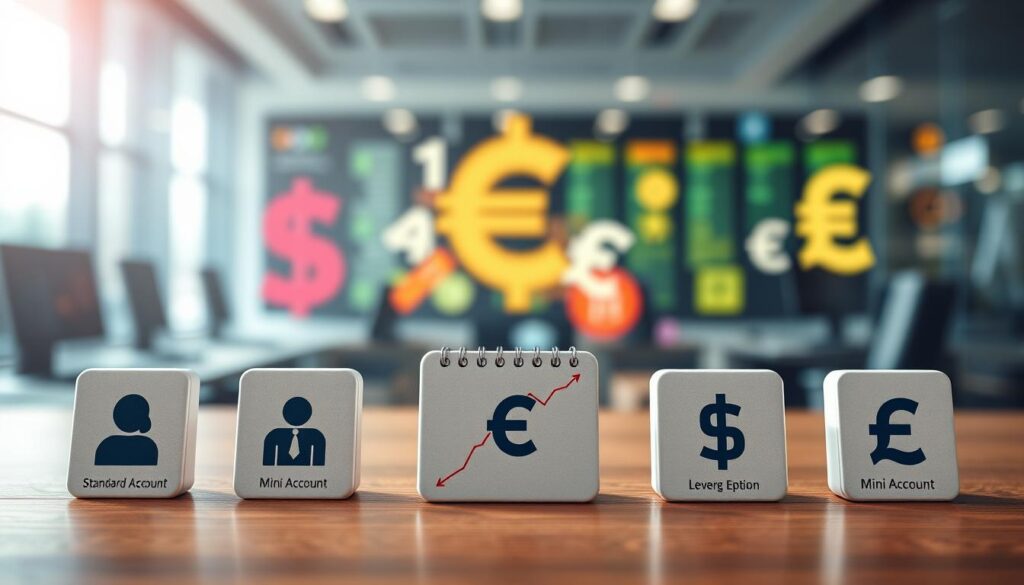
Financial service providers offer diverse account structures to match different trading preferences and experience levels. These options help participants select the right environment for their specific needs and available capital.
Three primary execution models exist for market access. STP accounts route orders directly to liquidity providers. ECN accounts match orders with multiple liquidity sources. DMA accounts provide direct interbank market access.
ECN accounts typically offer competitive spreads by aggregating prices from various sources. These accounts usually charge commissions per trade rather than markup on spreads.
Brokers segment accounts by minimum deposit requirements. Standard accounts often require $100 deposits. Premium or VIP accounts may demand $5,000 or more in initial capital.
Higher-tier accounts provide enhanced benefits for serious participants. These include tighter spreads, reduced commission rates, and access to premium analytical tools. Dedicated account managers and priority support often accompany these premium offerings.
Leverage options vary significantly between regulated and offshore providers. Retail CFD brokers under tier-1 regulators typically offer maximum leverage of 1:30. This protects clients from excessive risk exposure.
Brokers operating in tier-3 jurisdictions may offer leverage ratios of 1:500 or higher. Such levels can amplify both profits and losses dramatically. Beginners should start with lower leverage and standard account types.
Deposit and Withdrawal Options in Thailand
The flexibility of moving funds into and out of trading accounts significantly impacts a trader’s operational ease. Thai residents benefit from generous daily deposit limits reaching $15,000 USD without bank transfer restrictions.
This facilitates substantial capital movements for serious market participants. Multiple payment channels ensure convenient account funding.
Local Payment Methods and Thai Baht Support
Leading financial firms support diverse payment options for Thai clients. These include major credit cards like Visa and Mastercard alongside popular e-wallets.
PayPal has emerged as a particularly favored method due to its security features. Local payment processors specific to Southeast Asia are also commonly available.
An important regulatory restriction exists regarding currency selection. Foreign residents cannot open accounts with the Thai baht as base currency.
This measure prevents direct speculation on the national currency. It maintains economic stability while allowing international market access.
Crypto and International Transfer Options
Progressive brokers now accept cryptocurrency deposits including Bitcoin and Ethereum. These digital payment options appeal to tech-savvy traders seeking fast transactions.
Payment processing fees vary significantly between different service providers. Some charge no fees on deposits and withdrawals while others apply transaction costs.
Understanding these fee structures helps traders select cost-efficient funding methods. The right payment channel combination optimizes speed, security, and affordability.
Utilizing Demo Accounts and Educational Resources

Educational materials and practice platforms form the foundation of successful trading journeys. These tools help participants develop skills without financial risk.
Virtual environments replicate real market conditions perfectly. Traders can test strategies and platform features safely.
Benefits of Demo Trading Environments
Practice accounts allow comprehensive testing of different execution models. Participants gain valuable experience with order types and analytical tools.
Leading firms like IG provide extensive learning content. FOREX.com’s Trading Academy offers award-winning courses for skill development.
These resources cover technical analysis and risk management strategies. Quality education helps traders create structured plans.
The combination of theoretical learning and practical application builds confidence. This approach prepares participants for live market conditions effectively.
Customer Support and Localized Service for Thai Traders
Responsive support services significantly influence how traders interact with financial platforms. Quality customer support ensures quick resolution of account issues and technical problems. This creates a smoother trading experience for all participants.
Leading providers offer multiple assistance channels including live chat, email, and phone support. These options cater to different urgency levels and communication preferences. 24/7 availability is essential since currency markets operate continuously across time zones.
Localized service extends beyond language capabilities to cultural understanding. Thai-speaking staff and regional website versions demonstrate commitment to local clients. This personalized approach builds trust and enhances user satisfaction.
Traders should test support responsiveness before committing to any service provider. Simple inquiries during demo account testing reveal response times and knowledge quality. This proactive evaluation prevents future frustration.
Poor customer service represents a significant warning sign when selecting platforms. Delayed responses or unhelpful staff can undermine even the most competitive pricing. Exceptional support contributes to positive long-term relationships.
The overall trading journey benefits greatly from reliable assistance resources. Confident participants tend to achieve better results when they know help is readily available. This security allows focus on market analysis and strategy execution.
Authenticating Broker Regulatory Status and Trust Scores

Before committing capital, traders must authenticate the regulatory credentials of any prospective service provider. This verification process separates legitimate operators from potentially risky entities. Proper due diligence protects investments and ensures market integrity.
Verifying SEC Authorization Tools
Thailand’s Securities and Exchange Commission provides an online verification tool for checking company authorization. This resource helps confirm whether firms operate under proper oversight. Not all service providers accepting local clients hold SEC approval.
Traders should verify that companies maintain licenses from multiple reputable jurisdictions. Regulated brokers face strict compliance requirements and capital adequacy rules. This oversight creates safer trading environments for participants.
Reviewing Trust Scores and User Ratings
Trust scores evaluate regulatory status, operational history, and financial stability. These assessments classify regulators into three tiers based on credibility and oversight standards. Tier-1 includes prestigious authorities like the UK FCA and Cyprus CySEC.
Tier-2 covers credible regulators such as South Africa’s FSCA. Tier-3 involves offshore jurisdictions with lighter supervision. Avoiding unregulated operators is crucial since they offer no protection mechanisms.
Comprehensive trust assessments combine regulatory standing with user feedback. This multi-factor approach provides a realistic reliability picture. Choosing well-supervised partners significantly reduces financial risks.
Live Trading Experiences and User Reviews
Real user feedback offers crucial insights beyond marketing materials for evaluating trading platforms. These authentic perspectives reveal how services perform during actual market conditions.
Insights from Active Participants
Trustpilot ratings show significant performance variations among service providers. Fusion Markets earns 4.8 stars from 4,873 reviews, while FP Markets achieves an impressive 4.9 rating from 9,422 reviews.
User feedback highlights critical performance aspects. These include platform stability during volatile periods and trade execution quality. Reviews document order fill rates, slippage frequency, and requote occurrences.
Customer service responsiveness emerges as a key factor in reviews. Traders report how quickly companies resolve account issues and technical problems. Withdrawal processing efficiency receives particular attention in user comments.
AvaTrade maintains a strong 4.7 rating from 11,076 reviews. BlackBull Markets scores 4.8 from 2,681 reviews. Established firms like IG receive 3.9 from 8,324 reviews, indicating mixed experiences.
Aggregated reviews help identify consistent strengths and weaknesses. Reliable platforms and competitive pricing stand out as positive attributes. Poor support and hidden fees appear as common concerns.
Thai participants should consult multiple review sources. Consider both rating scores and review volume when evaluating reputations. Larger review samples provide more reliable performance indicators.
Detailed Comparison: Forex Brokers vs. CFD Brokers

Traders navigating global markets encounter two primary service models: currency-specialized brokers and multi-asset CFD providers. Understanding their distinct characteristics helps participants select appropriate platforms.
Traditional forex brokers concentrate primarily on currency pair trading. They offer deep liquidity and specialized tools for foreign exchange markets.
Side-by-Side Feature Analysis
CFD brokers expand offerings beyond currencies to include indices, commodities, stocks, and cryptocurrencies. This provides diversified access through single accounts.
CFDs represent complex instruments with high risk of rapid capital loss due to leverage. Between 51% and 89% of retail investor accounts lose money when trading these contracts.
Both service types involve margin requirements and leverage. Regulatory caps differ significantly across jurisdictions and asset classes.
Tier-1 regulators typically limit retail leverage at 1:30 for forex pairs. They restrict cryptocurrency CFDs to 1:2 for investor protection.
Many top-rated brokers now offer unified platforms combining both forex and CFD trading. This allows efficient diversification across multiple financial instruments.
How to Choose the Right Forex Broker in Thailand
Selecting a suitable financial partner requires careful consideration of several critical factors. This process ensures a secure and effective trading environment tailored to individual needs.
The initial step involves opening an account with a well-regulated broker that accepts local residents. A firm’s regulatory standing is the most important safety check.
Key Evaluation Factors
Traders should assess potential partners across multiple dimensions. A comprehensive review prevents future issues.
- Regulation: Verify licenses from multiple respected jurisdictions for enhanced security.
- Trading Costs: Understand all fees, including spreads, commissions, and non-trading charges.
- Platform Quality: Evaluate the stability and features of the trading software.
- Customer Support: Check for responsive, multilingual assistance, including Thai language options.
- Educational Resources: Ensure the brokerage offers materials for skill development.
One must make sure to thoroughly read the provider’s terms and conditions before committing.
Tips for Safe and Informed Trading
Practical steps lead to confident participation. Testing platforms through demo accounts is highly recommended.
This allows users to familiarize themselves with tools and execution without financial risk. It is also wise to confirm support for local payment methods.
Developing a structured plan is crucial for long-term success. A good plan manages risk effectively. Following these guidelines helps individuals make sure their trading journey begins on solid ground.
Tips to Avoid Forex Scams and Unregulated Brokers

Protecting capital from fraudulent operators is a critical skill for any market participant. Scams can appear convincing, making awareness essential.
Vigilance helps safeguard hard-earned money. This guidance outlines common warning signs and protective measures.
Recognizing Red Flags in Broker Practices
Unregulated status is the most significant warning sign. Legitimate firms hold licenses from respected authorities like the UK FCA.
Promises of guaranteed profits or risk-free trading are major red flags. All trading involves substantial risk, and most retail accounts lose money.
High-pressure sales tactics urging immediate deposits should raise concerns. Reputable brokers provide information without pressure.
Unclear fee structures or hidden charges indicate potential problems. Transparent pricing is a hallmark of trustworthy service.
Withdrawal difficulties often signal fraudulent operations. Clients should make sure they can access their funds easily.
Consistent negative reviews about support or unauthorized activities warrant investigation. A good reputation is built on client satisfaction.
Always verify regulatory status before depositing any money. This simple step prevents most common scams effectively.
Innovative Trading Platforms: MT4, MT5, and Proprietary Tools
Technological innovation in trading platforms has transformed how participants approach currency markets worldwide. These sophisticated systems provide powerful analytical capabilities that enhance decision-making processes.
MetaTrader 4 remains the most popular platform among retail traders globally. Its reliability and extensive customization options make it a preferred choice. The platform supports automated trading through Expert Advisors.
MetaTrader 5 builds upon this foundation with enhanced features. It offers expanded timeframes and more built-in technical indicators. Economic calendar integration provides valuable market context.
Proprietary platforms developed by leading firms often surpass standard solutions. These custom systems feature advanced sentiment indicators and AI-powered trade suggestions. Integrated market research tools streamline analysis.
Key platform features include:
- Algorithmic trading capabilities for automated strategies
- Backtesting tools using historical market data
- Sophisticated charting packages with multiple timeframes
- Real-time news feed integration
Desktop versions typically offer the most comprehensive feature sets. Mobile platforms prioritize convenience for remote monitoring. Multiple platform access ensures trading continuity.
Ongoing innovation includes artificial intelligence integration and social trading features. Advanced risk management tools help with position sizing. Selecting firms offering diverse platform options provides flexibility for different trading styles.
Final Thoughts on Selecting a Successful Forex Broker
The journey toward sustainable market participation begins with identifying reliable and well-regulated service providers. Choosing the right forex broker significantly impacts a trader’s overall experience and long-term success in the financial markets.
Thai traders should prioritize regulatory compliance and transparent fee structures. A quality brokerage offers robust platforms and comprehensive educational resources. Make sure to test platforms through demo accounts before committing real capital.
Continuous learning and disciplined risk management remain essential for sustainable trading outcomes. The right partnership creates a foundation for confident participation in global forex trading activities.